

Velduro is operated by a small three-person team: two based in New Zealand and one in China, with additional frame design input from an Aussie bloke named Hugh, who also works with i-Track. Dan handles marketing, Anthony oversees product management, and Dick, based in China, leads tech, engineering, and manufacturing.
• Wheel size: 29"/27.5” MX
• Travel: F: 170mm | R: 165mm
• Carbon Frame
• 63.5° head angle
• Chainstay length: 440mm
• Avinox M1 Drive Unit
• 800 WH battery
• Sizes: S, M, L, XL
• Weight: 56 lb / 25.4 kg (L w/ pedals, actual)
• Price: $7,200 - $14,300 CAD
• More info: velduro.com
Founded in 2024, Velduro was born out of 'frustration with overpriced, hype-driven e-bikes that didn’t match the riding demands of New Zealand’s trail networks'. The stated goal is 'to leverage NZ–China collaboration to deliver high-spec, fairly priced e-bikes that can stand toe-to-toe with global brands, while showcasing New Zealand’s design sensibilities.'
The Rogue is Velduro’s flagship mountain bike: a gravity-oriented e-MTB with 165–172mm of rear travel, a DH-certified frame (ASTM category 5), and plenty of built-in adjustability via multiple flip chips.
At the heart of this stealthy brawler is the Avinox M1 drive unit, which has shaken up the e-MTB world through 2025, delivering up to 120Nm of torque and 1,000 watts of peak power. Power comes from an 800Wh battery tucked into the downtube.
The Rogue is offered as both frame kits and complete bikes. While it’s not yet available in the USA, Canadian pricing ranges from $7,200 CAD for a frame kit without a shock to $14,300 CAD for a top-tier complete build. For our American readers, Velduro assures us that US distribution is coming soon.

Frame Details
The name of the game with the Rogue is burly and adjustable. The four-bar mid-pivot layout uses i-Track’s patented design, the same system seen on high-pivot bikes from brands like Norco and Intense.
In the i-Track system, the idler is mounted to the chainstay, meaning its position relative to the chainring changes throughout the suspension travel. This is the more common approach among high- and mid-pivot designs, as opposed to systems like Forbidden’s, which mounts the idler to the front triangle. The advantage of i-Track is increased tuning flexibility for suspension kinematics and pedalling characteristics, depending on the idler and linkage configuration. More on that below.
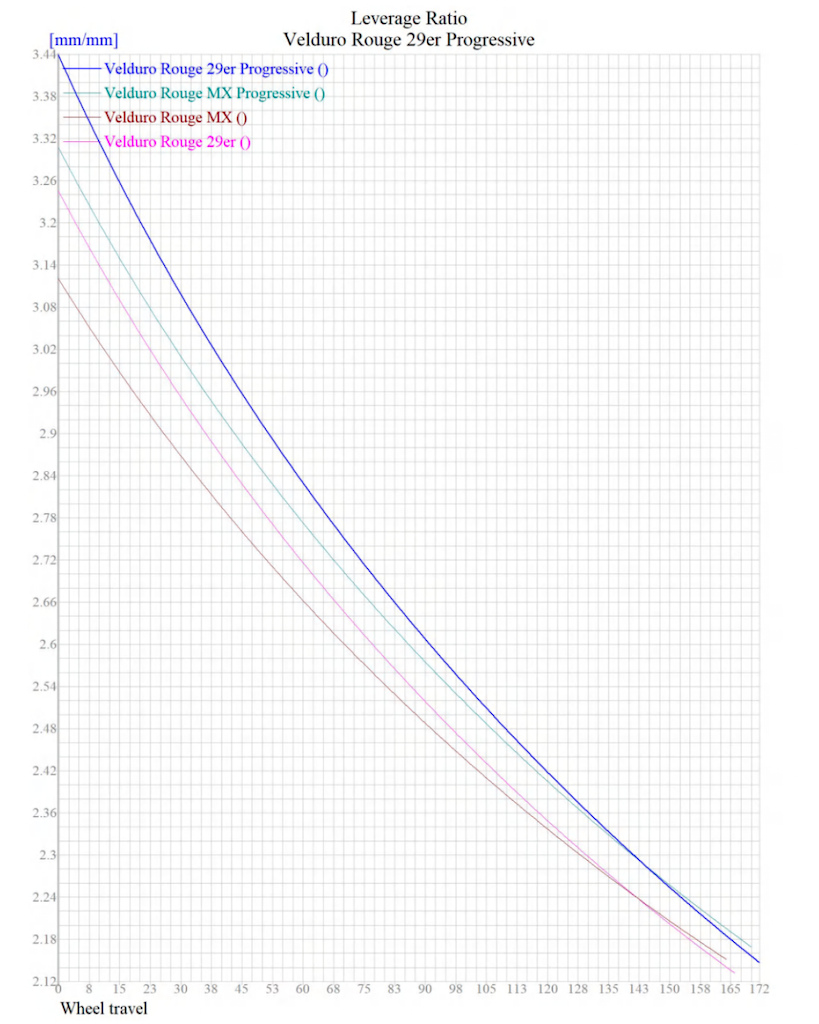
A flip chip at the top of the seatstay adjusts rear travel between 165mm and 172mm, and switches between mullet and dual-29 configurations. A second flip chip at the lower shock mount adjusts progression between 32.5% (27.5” standard mode) and 38% (29” progressive mode).
Our test bike ran a 205 x 65mm shock, which Velduro has optimized the kinematics around. Riders can also short-stroke the shock down to 57.5mm, reducing rear travel to a minimum of 150mm. Fork compatibility extends up to 180mm of travel.
The frame’s DH certification means it’s been subjected to higher testing standards intended to handle rougher descending. Other nice details include generous rubber protection on the seat and chainstays to reduce noise, oversized and easily accessible bearings, and clean cable routing that supports both North American and moto-style setups.


Motor & Battery
The beating heart is, of course, the Avinox drive unit, producing up to 1,000 watts of peak power, 120 Nm of torque, and paired with an 800Wh battery. By now, many readers should be familiar with Avinox. It’s been a disruptor in the e-bike market, and smaller brands with shorter development cycles have been the quickest to capitalize.
While the Rogue ships with the 800Wh battery, riders also have the option of swapping to the lighter 600Wh battery if they choose to purchase one separately. Note that the motor must be removed from the frame to perform battery changes.
Geometry

Chainstay length remains consistent across sizes at 440mm, a number Velduro describes as “reasonable.” Stack heights sit in the middle of the road for enduro bikes, ranging from 634mm (S) to 648mm (XL).
All sizes can be run in either mullet or dual-29 configurations via the seatstay flip chip. A second flip chip at the lower shock mount independently controls travel and progression.
As with most four-bar layouts, the Rogue features a long seat tube, allowing riders to run appropriately sized dropper posts. A size small, for example, offers up to 262mm of insertion depth. The roomy front triangle also leaves space for a full-size water bottle or frame-mounted tools.
Suspension
Velduro describes the Rogue’s platform as "a mid-pivot design intended for New Zealand’s gnarliest trails." Given the DH certification and aggressive geometry, there’s a clear descending bias here.
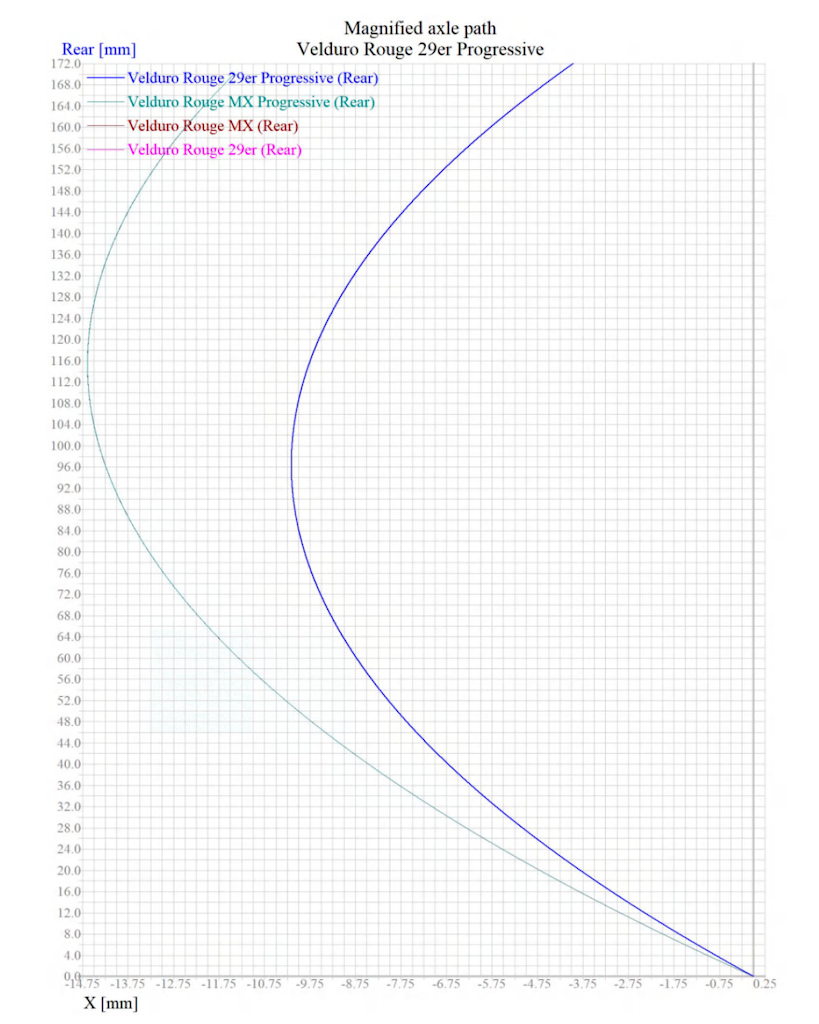
As with all high-ish-pivot designs (and yes, mid-pivot counts), the key benefit is a rearward axle path early in the stroke, allowing the rear wheel to move in the same direction as trail impacts rather than fighting them. On the Rogue, the maximum rearward axle path ranges from 9.75mm to 14.5mm, occurring roughly two-thirds into the travel before arcing forward near bottom-out.
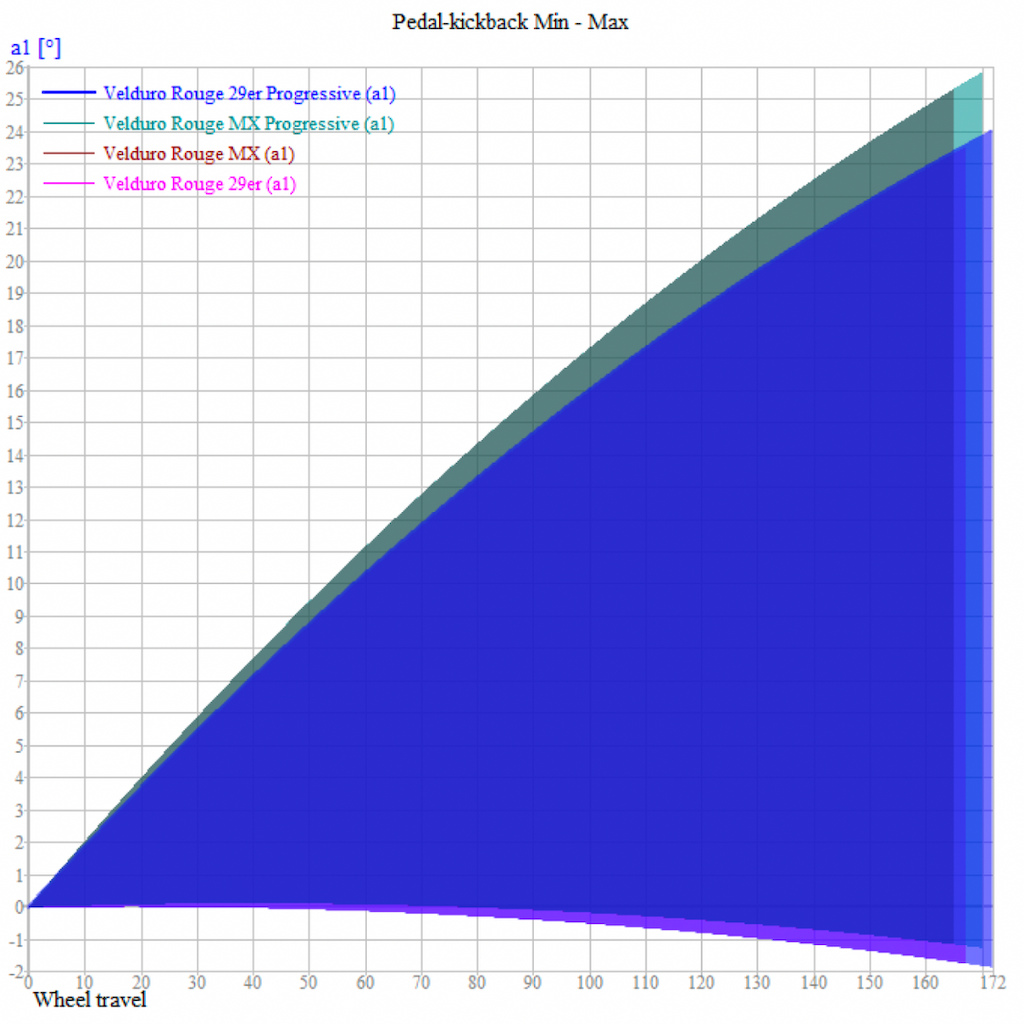
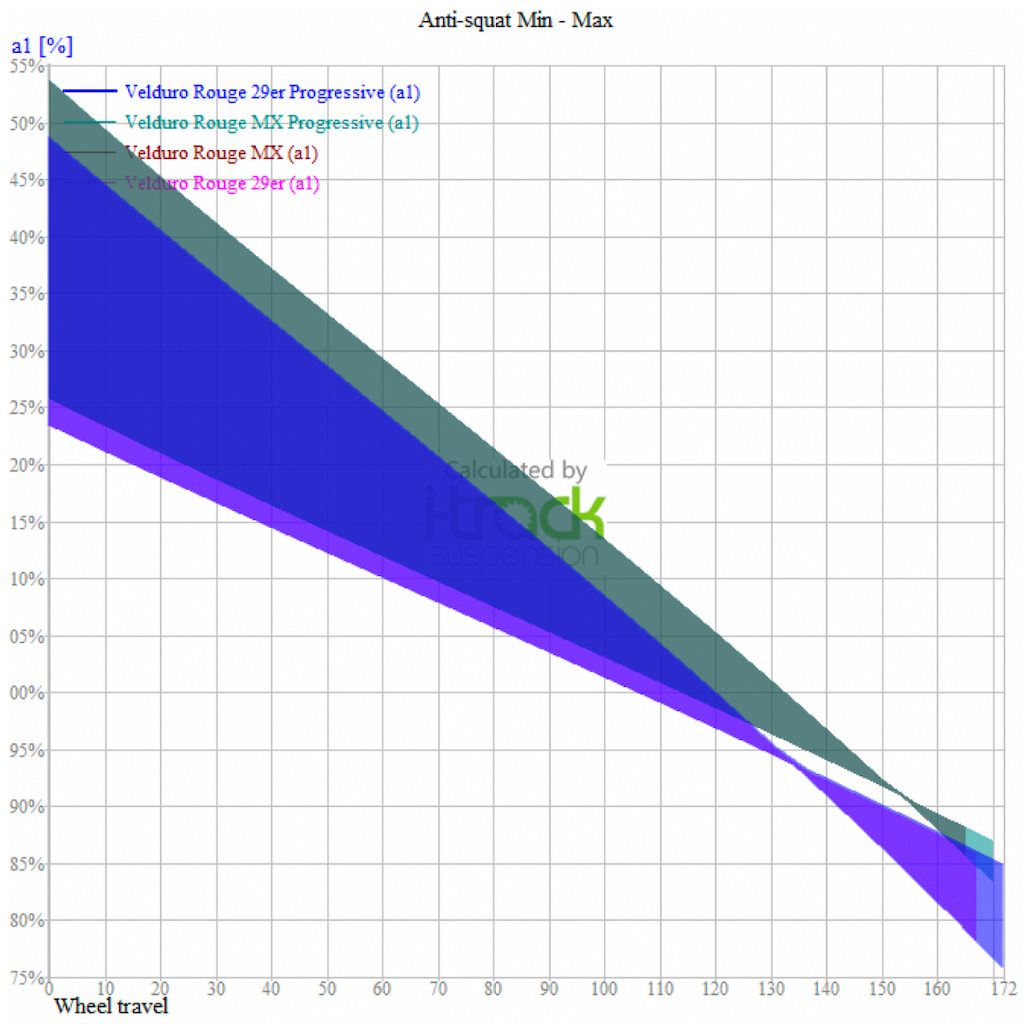
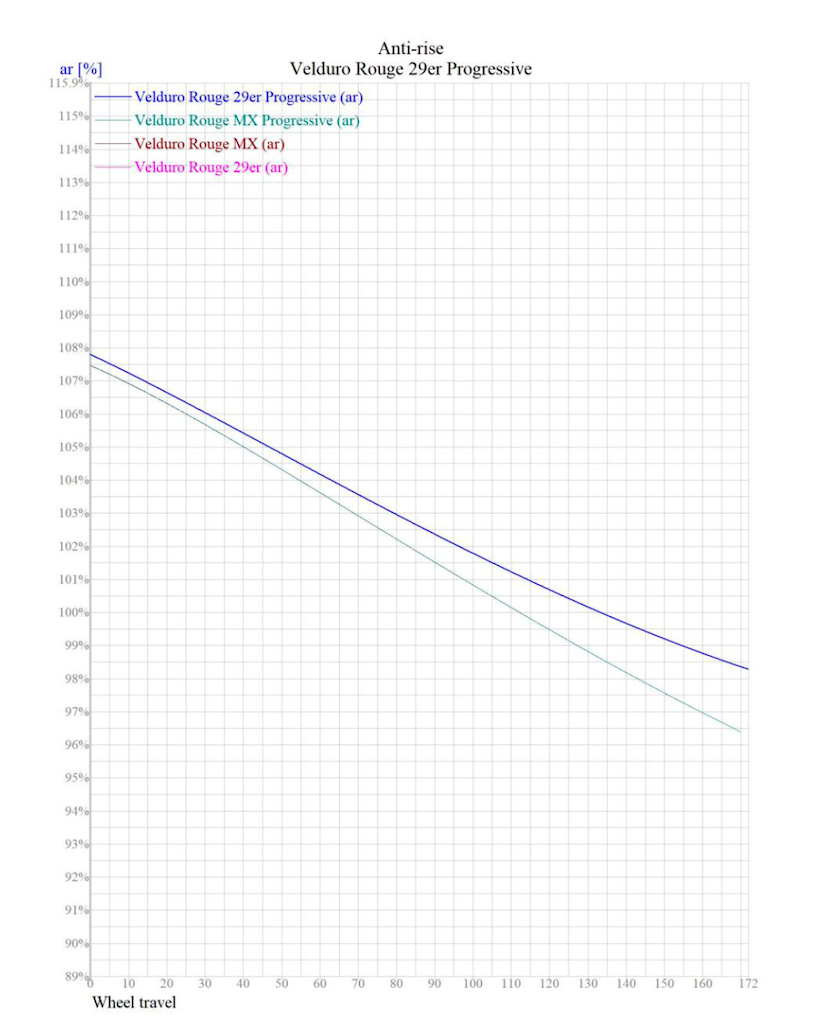
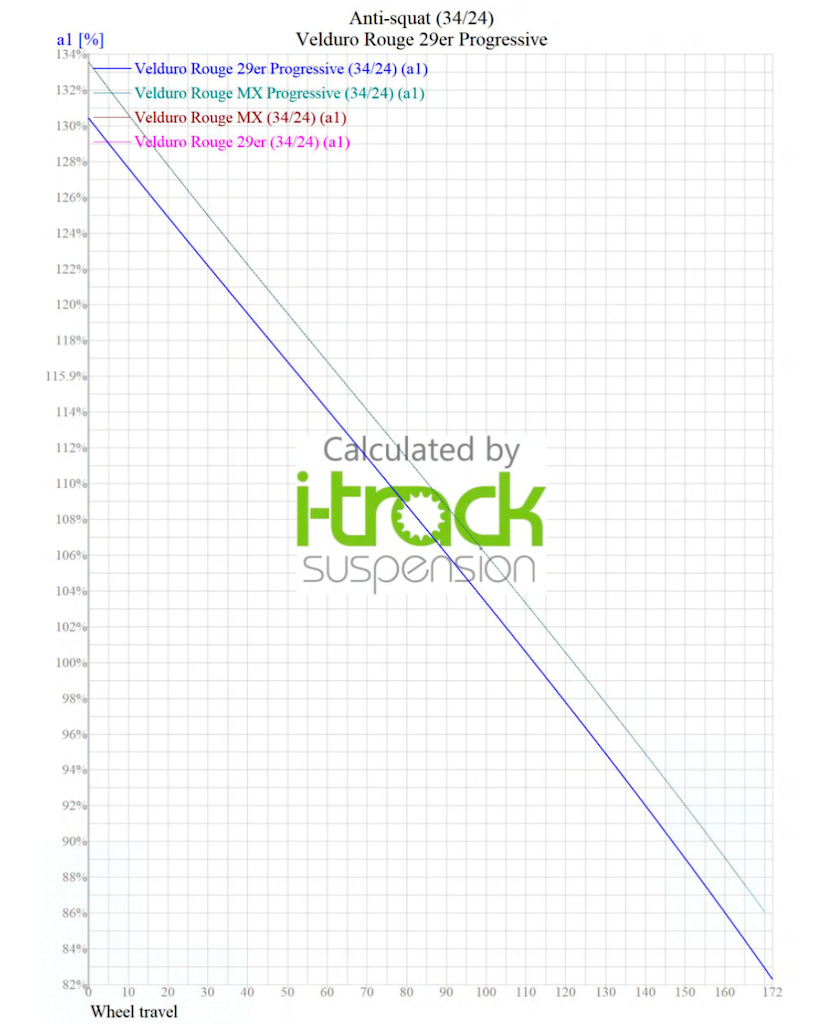
The 16-tooth idler, mounted to the chainstay via i-Track’s patented system, allows further tuning of pedalling characteristics. Velduro says the system was tuned specifically around the Avinox torque curve, keeping the rear tire planted on steep climbs. Pedal kickback is reportedly reduced by 10 degrees, while anti-rise sits between 90–110%, minimizing brake jack without excessive squat.
The leverage curve delivers a sensitive initial stroke with strong end-stroke support, meaning no special shock tunes or unusually high pressures should be required. Progression is adjustable via flip chip, ranging from 32.5% (27.5” standard) to 38.8% (29” pro).

For our readers who enjoy charts:
Models & Pricing
The Rogue is available in four configurations:
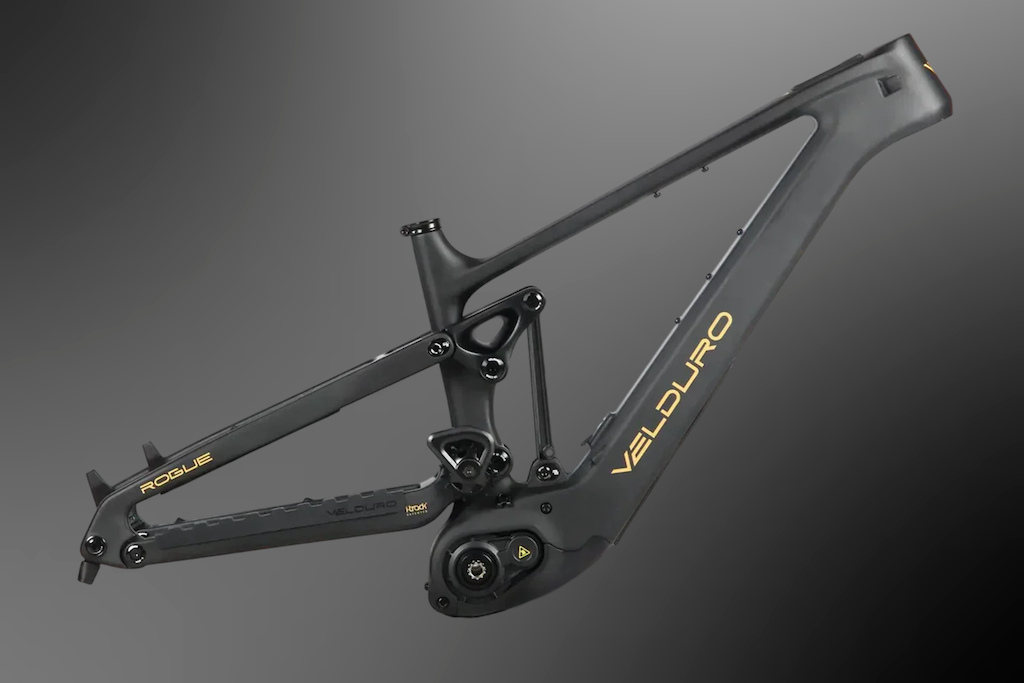
$7,200 CAD // 7599NZD
• Avinox M1 250W 105Nm, boost to 1000W 120Nm
• 800Wh Battery
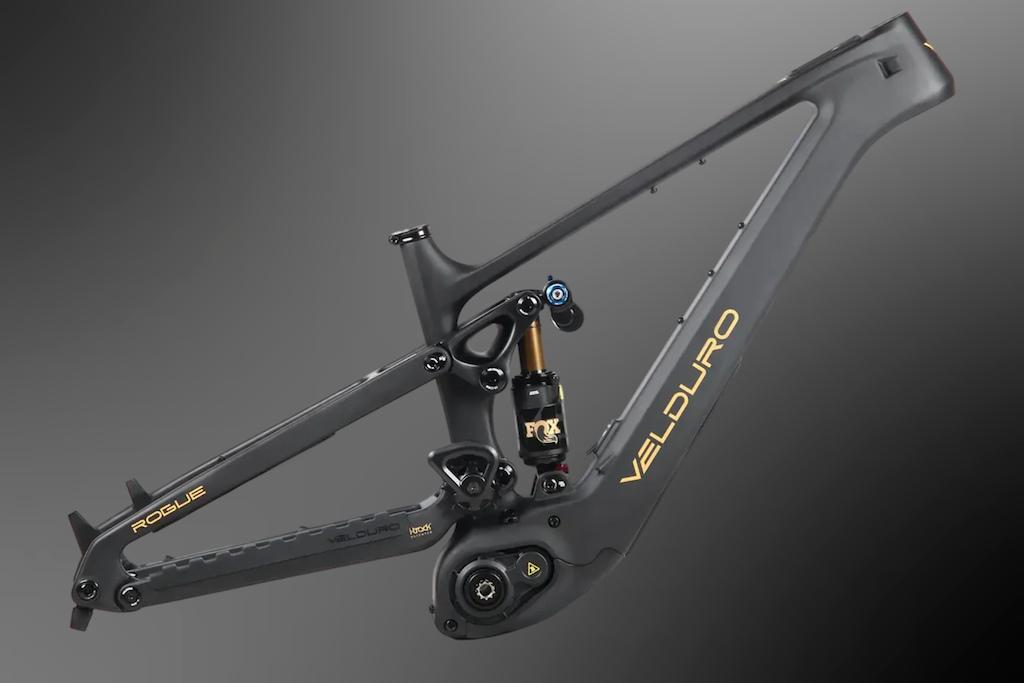
$7,900 CAD // 8499NZD
• Avinox M1 250W 105Nm, boost to 1000W 120Nm
• 800Wh Battery
• Fox Float X2 Factory
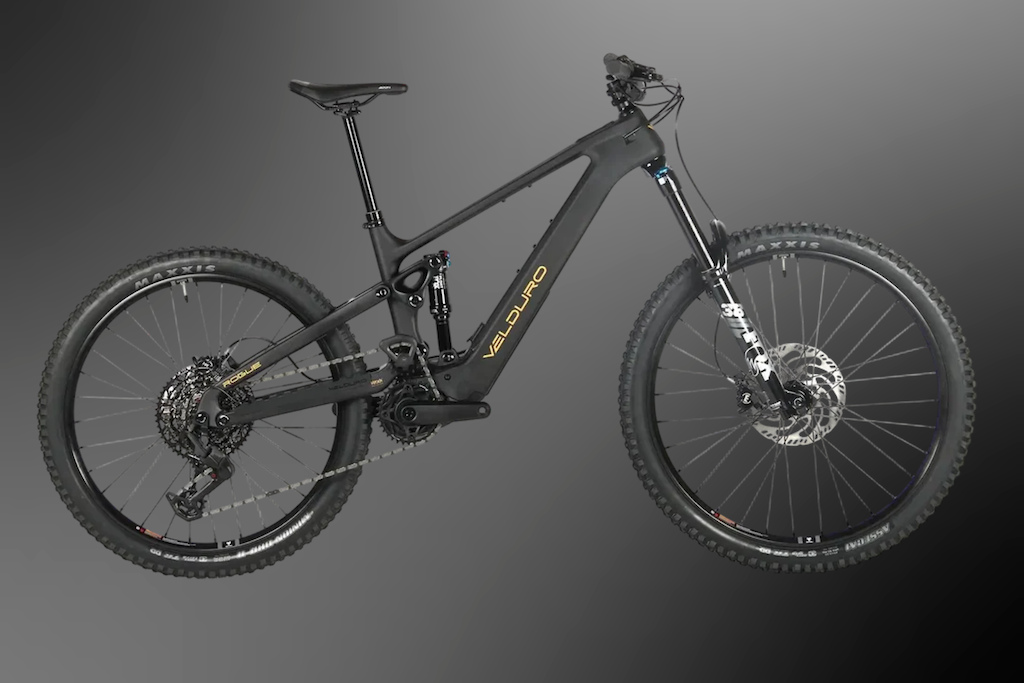
$11,000 CAD // €6,999 EUR
• Everything Included in the Frame Kit
• Fox Float X2 Performance / Fox 38 Performance
• Magura MT5 HC / MDR-C rotors (220F/200R)
• Sram Eagle 70 Cable Transmission
• Velduro e-Enduro Alloy Wheelset
• Front Maxxis Assegai 29x2.5 3C Grip DD
• Rear Maxxis DHR II 27.5x2.4 3C Terra DD
• Velduro Alloy stem (40mm) / Alloy Handlebar (35D 20R)
• Velduro Dropper Post
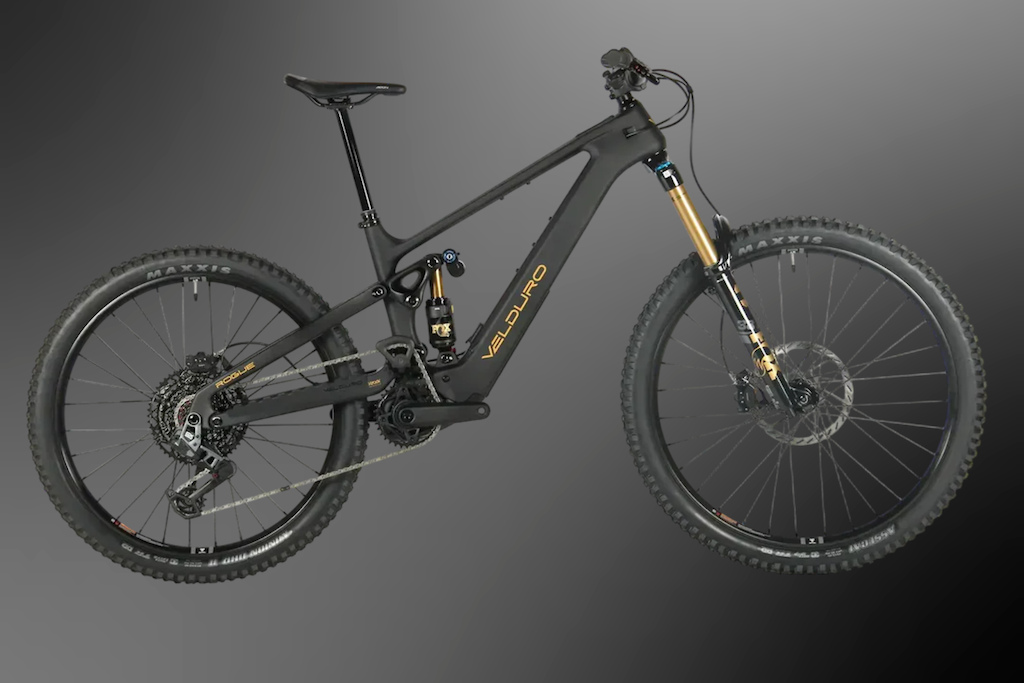
$14,300 CAD // $16,999NZD
• Everything Included in the Frame Kit
• Fox Float X2 Factory / Fox 38 Factory
• Sram Maven SLV Brakes / HS2 rotors (220F/200R)
• Sram GX AXS Transmission
• Velduro e-Enduro Carbon Wheelset
• Front Maxxis Assegai 29x2.5 3C Grip DD
• Rear Maxxis DHR II 27.5x2.4 3C Terra DD
• ONEUP Alloy stem (42mm) / Alloy Handlebar (35D 35R)
• ONEUP Dropper V3
Velduro bikes are currently available in: New Zealand, Australia, Canada, Switzerland, the United Kingdom, Chile, the Dominican Republic, Germany, the Netherlands, Belgium, Luxembourg, Spain, South Korea, Slovenia, Slovakia, Argentina, Singapore, Hong Kong, and Réunion. You can find a dealer near you here.
Ride Impressions
My time on the Rogue was short and sweet. Canadian rep Scott Pilecki was passing through and left the bike with me for a single afternoon, so I wasted no time.
Given that this ride happened in December, conditions on Vancouver Island were about as wet and sloppy as you can get before trails become covered in snow. I rode a selection of my favourite gravity-oriented trails in the Cumberland network, including some of the most DH-esque lines you can pedal to before linking into neighbouring shuttle zones. In total, I managed 33km and just under 1,500m of elevation in a solid workday-funday.
An unfortunate mid-ride flat shortened the session further, forcing a ride home and back up. Lesson learned, I now carry tools and a pump while reviewing bikes. Probably should have done that sooner. Alas.
Climbing
Yes, I know, it’s an e-bike. But climbing still matters.
My first impression was just how comfortable the Rogue felt seated on climbs. With a 485mm reach and 78° seat angle, my hands and hips landed exactly where I like them. If “fits like a glove” applies to bikes, this one qualifies for my given taste.
For reference, I’m 6’3”, 230 lb, and typically size down to a Large, aiming for reach numbers in this range. The suspension tracked the ground exceptionally well, even through slippery, chunky rock sections. The rear wheel consistently stayed glued to the ground, delivering impressive traction.
The Avinox system continues to impress. Power delivery is smooth, plentiful, and impressively quiet. The user interface is excellent, allowing fine-tuning of motor settings, ride tracking, and more via the frame-mounted touchscreen or app.
Descending
It’s worth noting that this particular bike was not light, tipping the scales at 56 lb (25.4 kg). This build was put together by Velduro’s Canadian distributor, NRG Enterprises, as a high-end showcase bike for prospective dealers.
The build included Fox Factory suspension, a Helix Coils alloy coil from Nelson, BC, SRAM GX Transmission, dual CushCore with DD/DH Maxxis tires, and finishing kit from Hope and Chromag. Unsurprisingly, it was built to smash rough trails, and heavier than Velduro’s claimed 23 kg (50 lb) top-spec Rogue R complete bike.
That weight was noticeable, but not entirely a downside. Much of it, from what I can gather, came from gravity-focused components like the coil shock, inserts, and tires, which leaned hard into the bike’s descending intentions. After all, descending is where the Rogue truly shines.
The thought that kept popping into my mind during my ride was how the Rogue felt up there with the closest thing to a downhill bike in a non-downhill package I’ve ridden. The suspension was outstanding, borderline magic carpet, reminiscent of the Yeti LTE we rode in the recent Field Test. Bumps disappeared, and the bike encouraged hard charging from the very first descent.
Grip and confidence were ample. Whether it was the tires, CushCore, suspension, or all of the above, the Rogue put a grin on my face the entire way down. It felt most at home charging straight through the roughest sections as hard as I dared.
Of course, there are trade-offs. That downhill-bike feel favours fast, steep, and open trails. In tighter corners or more jump-heavy sections, the bike felt more glued to the ground and less lively. I’d be curious to experiment with different flip-chip settings, lighter builds, or shorter shock strokes, as I suspect those configurations could make meaningful changes to ride feel. In this configuration, I can confidently say the Rogue is an absolute DH-lapping monster.
A couple of standout component mentions: the coil shock felt excellent, offering a super active feel without sacrificing support when pushing hard. The Hope EVO GR4 brakes were also notably impressive on my first outing with them. On descents that typically cook my brakes (usually I run Mavens), the Hopes stayed consistent top to bottom with no fade, solid power, and more generous modulation. Consider my interest piqued for those brakes.
There’s no long-term test on the horizon just yet due to limited bikes and plenty of moving parts for the young brand. That said, I do hope to throw a leg over one again soon and experiment with different setups, as it feels like there's a lot more to get out of this highly adjustable platform.